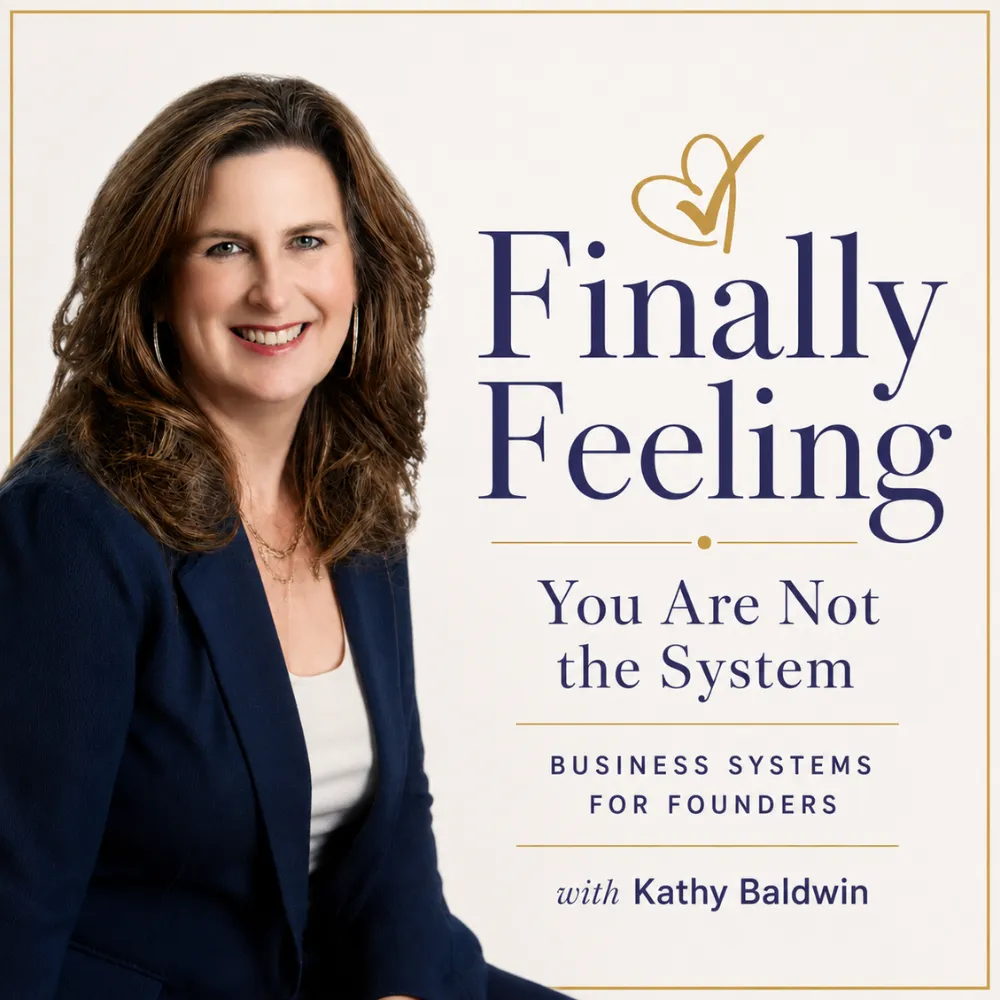
From Corporate Layoff to $4M Franchise: The Human and System Behind the Growth
From Corporate Layoff to $4M Franchise: The Human and System Behind the Growth
Listen to the audio episode: https://player.captivate.fm/episode/4f228548-3f6d-43c9-b00f-92b5e3ba7624/
Watch the YouTube episode:
When Todd Krause lost his corporate finance job in March 2020, the world was already starting to shut down.
He had a mortgage, two kids, and the kind of moment that can make a person question everything they have built their identity around. Todd had spent years in corporate finance, working around hedge funds, private equity, venture capital, and operational finance across multiple industries. Then, almost overnight, he was back at the beginning of the question every founder eventually has to face in one form or another.
What do I build from here?
Within days, Todd found a cleaning business for sale in his own backyard. To some people, that may have looked like a strange move from corporate finance. To me, it is the kind of move that makes sense when someone knows how to see the business underneath the business.
Todd did not just see cleaning.
He saw an operating model. He saw customer retention. He saw staff turnover. He saw culture. He saw the relationship between morale, quality, referrals, reviews, and profit. He saw the places where the business was already working and the places where the structure underneath it was quietly costing money, energy, trust, and growth.
That is the lens I bring to founder-led businesses every day through Finally Business Systems.
Most founders come to me because something feels heavier than it should. They are still carrying too much of the business in their head, their nervous system, their inbox, their client calls, their team decisions, and their late-night problem-solving. They usually think they need another tool, another hire, another funnel, another automation, or another push.
Sometimes they do need those things.
But first, we have to find the gaps, friction, bottlenecks, and roadblocks that are already shaping the business.
Todd’s story is powerful because it gives us a real-world example of what happens when the human and the system are rebuilt together.
Founder-Led Businesses Do Not Usually Break All at Once
One of the biggest patterns I see in founder-led businesses is that the founder slowly becomes the operating system.
The founder remembers what the CRM does not capture. The founder explains what the sales page does not make clear. The founder trains around the missing process. The founder fixes the automation when the logic underneath it was never properly mapped. The founder carries the client experience when the buyer journey has not been built to do its job.
From the outside, the business can look successful. It may have revenue, referrals, clients, a strong reputation, and real momentum.
Inside the business, the founder is often still the one holding the pieces together.
That is where I start looking.
Not at the founder as the problem, but at the business structure that has made the founder too necessary in too many places.
Your business did not become dependent on you because you failed. It became dependent on you because you were capable enough to compensate.
That distinction is important because shame does not fix operations. More pressure does not build systems. And telling a capable founder to “just delegate” does not solve the deeper issue when the business has not been built with enough clarity for delegation to actually work.
A founder cannot cleanly hand off what has never been extracted, defined, sequenced, documented, measured, or supported.
Todd’s Cleaning Franchise Was a Business Systems Case Study
When Todd bought the cleaning franchise, he did not walk into a blank slate. The business already had customers, staff, revenue, and a franchise model behind it.
It also had a toxic culture.
The morning rhythm of the business was built around managers telling cleaning teams what they had done wrong, what they had broken, what they had missed, and what consequences they needed to avoid.
That type of culture has an operational cost.
It shows up in turnover. It shows up in complaints. It shows up in low ownership. It shows up in inconsistent delivery. It shows up in hiring pressure, customer churn, and the amount of emotional supervision required to keep people moving.
This is where many founders miss the connection.
Culture is not separate from operations. Culture is how operations are experienced by the human beings inside the business.
Todd changed the management structure by changing the daily operating message. Instead of leading with “no,” “don’t,” and consequence, he wanted the teams told what customers were asking for, what the company needed them to do, and what the rewards would be when they delivered well.
That was not motivational fluff.
That was a systems change.
He changed the inputs, the feedback loop, the reward structure, and the expectation of ownership. The business stopped training people to avoid punishment and started giving them a reason to care about the outcome.
That is the difference between managing behavior and designing an operating environment.
How Do I Know If I Am the Bottleneck in My Business?
If you are asking this question, the answer has probably already started showing up in your business.
You may be the bottleneck if your team keeps waiting for your approval before they can move. You may be the bottleneck if clients need you personally to explain, reassure, clarify, smooth over, or rescue too many parts of the experience. You may be the bottleneck if your automations technically fire, but you still have to manually interpret what should happen next. You may be the bottleneck if the business cannot make clean decisions without routing too much through your memory, judgment, or emotional labor.
This does not mean you are controlling.
Sometimes control is part of it, but more often, the business never learned how to hold the intelligence that has been living inside the founder.
That is one of the core things I look for in a Finally Business Audit.
Where is the founder still acting as the memory?
Where is the founder still acting as the decision engine?
Where is the founder still acting as the quality control system?
Where is the founder still acting as the sales bridge?
Where is the founder still acting as the emotional shock absorber for weak structure?
Todd’s story gives us a clean example of what happens when a business stops routing everything through one person.
His managers did not become owners overnight. They developed ownership through a structure that allowed them to grow into it.
At first, they came to him with problems and asked what to do. Then they started coming with possible solutions. Then they started telling him what they had already handled. Eventually, many of the problems did not need to reach him because the team had learned how to think, decide, and act inside the values of the business.
That is how founder dependency starts to come down.
Not through abandonment. Not through chaos. Not through pretending the founder does not have a role.
Through structure.
Systems Should Protect the Human Intelligence Inside the Business
There is a dangerous misunderstanding in the market right now that systems, automation, and AI are supposed to remove the human from the business.
That is not how I build.
A strong business system should protect the human intelligence inside the business. It should extract the founder’s judgment, clarify the buyer journey, support the client experience, reduce repetitive drag, and make the right human work easier to deliver.
The goal is not to make the business colder.
The goal is to stop making the founder personally responsible for holding what the business should have been built to hold.
Todd’s business grew because he did not separate people from performance. He connected them.
He connected employee effort to customer experience. He connected customer feedback to compensation. He connected manager decision-making to shared values. He connected complaints to operational learning. He connected the future of the business to the people already helping him run it.
That is what I mean when I talk about the human and the system working together.
A tool can send a message.
A system knows when the message should go out, what it needs to say, what decision it should support, what data it should capture, and when a human needs to step in.
A tool can collect feedback.
A system knows how to use that feedback to improve training, reduce complaints, strengthen delivery, reward quality, and protect the client experience.
A tool can automate a task.
A system knows whether that task should be automated in the first place.
This is the work of Finally Business Systems. I look at the business as a full ecosystem, not a pile of disconnected tasks, tools, funnels, and workflows.
What Should I Automate First in a Founder-Led Business?
This is one of the questions I see founders getting wrong because they start with the tool instead of the business.
The first question is not, “What can I automate?”
The first question is, “Where is the business repeating effort, losing clarity, leaking revenue, delaying decisions, or forcing the founder to compensate?”
That answer is different in every business.
For one founder, the first automation opportunity may be lead follow-up because qualified people are falling through the cracks. For another, it may be onboarding because clients are buying and then entering confusion. For another, it may be internal handoffs because team members do not know what happens next. For another, it may be content repurposing because the founder’s intellectual property is strong but not being turned into enough usable assets.
Automation should not be a performance of sophistication.
Automation should remove friction from the right place in the business.
If the buyer journey is unclear, automating it faster does not create trust. If the offer structure is confusing, automation will not make people ready to buy. If the founder’s decision logic has not been extracted, AI will not magically know the judgment behind the decision. If the client experience has gaps, automation can make those gaps feel even more impersonal.
AI will not fix a business that has not extracted its own intelligence. It will just give the confusion better formatting.
That is why I do not start with automation for automation’s sake. I start by finding the friction, the gaps, the bottlenecks, and the roadblocks. Then we can decide what needs to be clarified, systematized, automated, delegated, or rebuilt.
Complaints, Objections, and Repeated Questions Are Operational Data
One of the strongest parts of Todd’s operating model was the way he used complaints.
He did not treat them as proof that the business was failing. He used them as data.
A single customer complaint may be isolated. Repeated complaints reveal a pattern. Once a pattern shows up, the business has something to inspect.
Is this a training issue?
Is this a process issue?
Is this a communication issue?
Is this a quality control issue?
Is there a mismatch between what the client expected and what the business delivered?
That same principle applies inside founder-led businesses of every kind.
The objections you hear on sales calls are data.
The questions people ask before buying are data.
The places where clients get confused are data.
The tasks your team avoids are data.
The automations you keep having to check are data.
The parts of the business you keep fixing manually are data.
The problem is not usually that the data does not exist. The problem is that no one has organized it into a clear operating picture.
Inside a Finally Business Audit, I am looking for those patterns.
I want to see where the business is telling the truth about what is not working. Not through drama. Through repetition.
The repeated issue is rarely random.
It is usually pointing to a missing piece of structure.
Business Architecture Is What Keeps Growth From Becoming Another Trap
A lot of founders say they want to scale, but the business they have built cannot cleanly hold more volume.
More leads would create more follow-up.
More clients would create more delivery pressure.
More offers would create more confusion.
More visibility would create more demand on a founder who is already too central.
More tools would create more dashboards, more notifications, more workflows, and more things to manage.
That is not scale.
That is a more complicated version of the same dependency.
Growth without architecture is how founders become trapped inside the thing they built to create freedom.
Todd’s business grew because the internal structure became stronger. Employees stayed longer. Customers noticed the quality. Reviews improved. Referrals increased. Operating expenses dropped. Managers became more capable. Todd was no longer the only source of movement inside the business.
That is clean growth.
Not just more sales.
Not just more leads.
Not just a bigger number.
Clean growth means the business can hold more without requiring the founder to become less human to make it work.
How Finally Business Systems Helps Founder-Led Businesses
Finally Business Systems helps founder-led businesses find and rebuild the places where the business is depending too heavily on the founder.
This is not a generic automation template or a surface-level business review.
The work goes deeper than that.
A Finally Business Audit looks at the buyer journey, offer structure, sales flow, client experience, operational process, team dependency, automation logic, founder knowledge, decision points, and the places where the business is leaking time, trust, revenue, or capacity.
I am looking for the hidden architecture.
Where does the buyer journey lose people?
Where are potential clients asking questions that should have been answered before the sales call?
Where is the founder explaining the value of the business one conversation at a time?
Where does delivery depend on undocumented knowledge?
Where are team members waiting for decisions they should be able to make?
Where are tools creating more work instead of removing it?
Where are automations technically working but strategically weak?
Where is the business making the founder carry what the structure should have held?
Once we can see the pattern, the next step becomes cleaner.
Some businesses need a better buyer journey. Some need offer clarity. Some need their founder intelligence extracted and turned into process. Some need workflow repair. Some need automation strategy. Some need better handoffs, better data, better dashboards, better client experience, or better internal decision logic.
Most need a combination.
The audit gives the founder a way to stop staring at the business from inside the pressure and start seeing the actual system they are operating in.
The Finally Feeling Podcast Is a Living Case Study in Human-Centered Business Systems
The Finally Feeling Podcast exists because these conversations need to happen in public.
Founder-led businesses are being sold more tools, more AI, more funnels, more content strategies, more productivity hacks, and more pressure to keep up. But if the structure underneath the business is not sound, more activity will not create freedom.
It will create more places for the founder to be needed.
This podcast showcases what it looks like when systems, tools, automations, people, and processes actually work for the business instead of trapping the founder inside it.
Todd’s story belongs here because he built the human side and the system side together. He did not treat employees as replaceable. He did not treat culture as decorative. He did not treat complaints as annoyances. He did not treat technology as a substitute for relationships. He did not make himself the hero of every decision.
He built a business where people could rise because the structure allowed them to.
That is the deeper conversation founder-led businesses need to be having.
Quotable Takeaways from Kathy Baldwin
“Your business did not become dependent on you because you failed. It became dependent on you because you were capable enough to compensate.”
“A business audit should not just tell you what is broken. It should show you where the business has been making the founder carry what the structure should have held.”
“AI will not fix a business that has not extracted its own intelligence. It will just give the confusion better formatting.”
“Systems should not remove the human from the business. They should protect the human intelligence that makes the business worth trusting.”
“Growth without architecture is how founders become trapped inside the thing they built to create freedom.”
“Founder bottlenecks are not always loud. Sometimes they look like repeated questions, stalled decisions, unclear handoffs, weak follow-up, and a founder who keeps compensating because the business never learned how to hold the pattern.”
“The goal is not to automate the human out of the business. The goal is to stop making the founder personally carry what a better system could support.”
Book Your Finally Business Audit
If your business still depends on you to catch the gaps, smooth over the friction, remove the bottlenecks, solve the roadblocks, and carry decisions that should already be supported by structure, this is the work.
A Finally Business Audit helps you see where your business is still depending on you in ways it should not be.
We look at the buyer journey, operational flow, client experience, team dependency, automation gaps, offer structure, decision points, and the places where the business is quietly costing you time, revenue, and capacity.
You will leave with a clearer view of what is actually happening inside the business, where the pressure is coming from, and what needs to be clarified, systematized, automated, delegated, or rebuilt.
If you are ready to find the gaps, friction, bottlenecks, and roadblocks inside your founder-led business, book your audit here:
BOOK YOUR FINALLY BUSINESS AUDIT: https://finalllybusinesssystem.com

